
Be responsive to responsive design
In a world of ever increasing diversity of devices, screen sizes & web browsers, many have chosen to adopt the responsive web design approach when creating their websites.
Israel today has over 4 and a half million smart devices such as phones and tablets, browsing to your site and it keeps growing and gaining momentum, Unlike in the past, currently use of responsive site design is no longer a luxury but considering when to use it, is a question of Time & money, Browser support, Performance, Content and Website vs. Web App.
Responsive Design (Multiple Fluid Grid Layouts), or loosely translated "reactive design" is an approach to design websites dedicated to providing the optimum viewing experience (ie: ease of reading, comfortable navigation and minimum use of zoom-in and zoom-out) widest possible variety of devices.
Site designed with "reactive design" is a program suitable for its display environment by using a dynamic interface based on the proportions of the elements on the site. "Reactive design" method allows your site to look good on any device and screen size in which it appears, simply because the elements on the site responds to the environment in which they are presented and in accordance with the elements we get optimal experience.
It is done quite simply, using the right technology through which the browser detects what device the user enters the site and adjusts its size and resolution in proportion and efficient as possible in accordance with the user device, an action which is done automatically. For example, on a phone, users would see content shown in a single column view; a tablet might show the same content in two columns.
A key part of most website’s content is of course their images, and there are several potential issues that arise when we want to make our images work well across a range of devices. Compared to computers that come relatively fixed sizes, when we look at mobile devices, we can not even begin to count how many different screen sizes should be considered.
If ever we are building websites with a main focus on the desktop experience and we could cut popular proportions that will produce 98% of the screens and browsers, nowadays, we have no chance. Unless, you are working with a Responsive design.
The structure of a responsive website also makes it easy for search engines to read. Without responsive design you may be accidentally duplicating content in a mobile and non-mobile website, which dilutes your content's rankings in the search engines and may even result in a ranking penalty.
In conclusion, In a world where renewable technology and updated hysterical pace, Responsive design is a forward-thinking technology, as it makes sites that will work on next year’s devices. It is our job to be renewed with it and offer our customers solutions that will position them at the forefront.
Branding and identity design is a basic concept that leads to the principles of visual cummunication and marketing of long-term business. It is very important to invest and be assigned by the right professionals to build the business branding strategy in order to be unique and differentiated from the competitors according to the vision of the business owner.

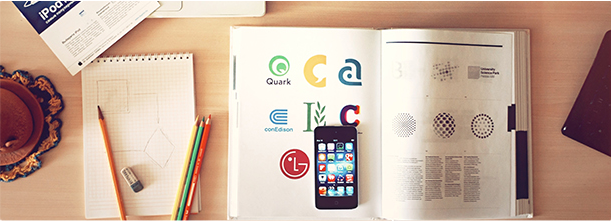
By Abraham Ibn Shoshan Dictionary (2010), the value "design", Even-Shoshan concentrated (page 733), New Dictionary "giving a form." To understand what is "design", first, it is important to realize that the design is not the need but it is the response to the need. Design is how we express the purpose to marketing in any variation of it, related to situations in everyday life of us all.
Since the marketing is full of competitors in all feilds we can conclude that there is an unceasing sophisticated creativity in every aspect and sector. Also, it is needles to emphasize the importence of proper marketing and construction for the product identity in order to make the difference.


Everyday and everything that we do starts with a thought, a minute to gather our ideas in lines, into sections, fields, sorted by meaning, preference, value and more if you will. By planning the road ahead for the product's life cycle you actually make the "ride" much easier down the line.
copyright © 2015.